What is private label HR software?
Learn what private label HR software is, how it differs from white-label and reseller models, and what partners should assess before launching a branded HR platform.

Private label HR software gives consultancies, payroll providers, resellers, and partner-led businesses a way to launch a branded HR platform without building the product from scratch. Instead of funding years of software development, a partner can take an established platform, apply its own brand, and sell the service as part of a broader commercial offer.
That matters because many buyers now expect HR software to cover onboarding, employee records, time off, documents, reporting, and day-to-day compliance support in one place. For businesses exploring the private label route or comparing the options on the wider Vesra partner programmes page, the opportunity is not just about adding another service line. It is about turning expertise into a more repeatable product.
This guide explains what private label HR software is, how it differs from white-label and reseller models, what features matter most, and how to judge whether the model fits your business. If you are still shaping your proposition, the Vesra guide on starting your own HR platform is useful background.
Private label HR software lets you go to market with a branded HR experience while the underlying platform, infrastructure, and ongoing product development are handled elsewhere. That can shorten the route to launch dramatically and make it easier to focus on pricing, positioning, support, and client delivery.
What is private label HR software?
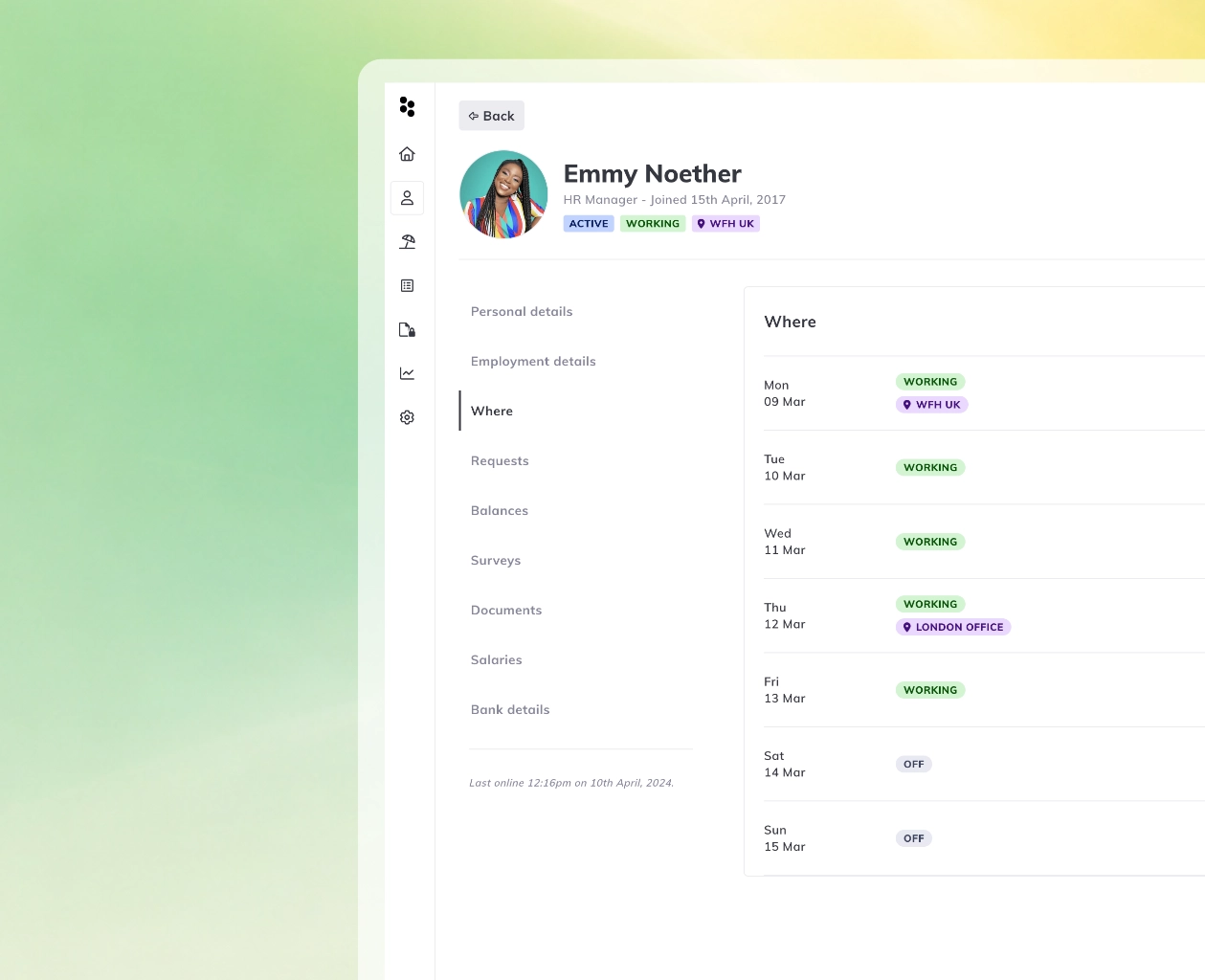
Private label HR software is a fully developed HR platform built and maintained by one company, then offered to partners who want to present it under their own brand. The partner owns the client-facing proposition, sales motion, commercial packaging, and day-to-day relationship. The software provider handles the product layer itself.
In practice, that means your clients see your logo, your messaging, and often your own domain, not the underlying vendor brand. They log into what appears to be your HR product, while the platform behind the scenes manages the workflows, hosting, security controls, and ongoing releases.
For many partners, that is the key attraction. You can focus on building a commercial offer around a proven product rather than spending time and capital trying to recreate core workflows such as employee onboarding, central people records, time off management, secure document handling, and structured compliance processes.
A strong private label arrangement usually combines three commercial layers:
- Product layer: the vendor builds, hosts, secures, and improves the platform.
- Brand layer: the partner presents the software under its own brand identity.
- Commercial layer: the partner decides how to price, package, and support the offer.
That combination is what turns private label HR software from a simple referral arrangement into a much more substantial business model.
Private label vs white label vs reseller: what changes?
The terms white label and private label are often used interchangeably, and in many day-to-day conversations they describe the same basic idea: an established product that another business brands and sells as part of its own offer.
Where people usually draw a distinction is in depth. White-label software can sometimes describe a lighter-touch arrangement where branding is the main change. Private label is often used when the partner relationship goes further and the commercial offer feels more like a branded product line with a stronger partner identity around it.
That is different again from a reseller model. In a reseller arrangement, you typically recommend or resell a named platform and stay closer to the advisory or referral side of the relationship. The vendor keeps the product brand front and centre. With private label, the client experiences the platform as part of your brand, not the vendor's.
For buyers, the real question is not which label sounds better. It is how the arrangement fits your commercial strategy. If you want your own branded proposition with stronger ownership of the client experience, private label will usually be closer to the mark. If you want a lighter-touch route with less product ownership, reseller may be a better fit.
How private label HR software works in practice
While each provider will run its own onboarding process, most private label arrangements follow a similar pattern.
1. Partner onboarding and proposition design
The first stage is defining the offer. That includes target audience, pricing logic, support boundaries, implementation scope, and the commercial route you actually want to take. For some businesses that is a direct private label offer. For others, it sits alongside white-label, reseller, or infrastructure-led options on the broader partner programmes page.
2. Brand setup and environment configuration
The platform is then configured to reflect the partner brand. That can include logo treatment, brand language, domains, and the way customer-facing resources are presented. The exact depth varies by provider, so it is worth looking closely at the public private label partner overview or demo route before you commit.
3. Client rollout and workflow setup
Once the partner environment is ready, client accounts can be set up with the structures, policies, and workflows each organisation needs. That often includes employee records, onboarding steps, leave settings, documents, and approvals. If you are packaging the platform for a more operational audience, the full features page is a useful way to map the offer against real buyer requirements.
4. Ongoing delivery and support
After go-live, the vendor continues to maintain the software while the partner focuses on sales, account management, implementation, and any additional HR or advisory services wrapped around the platform. This is where private label becomes commercially attractive: the software does the heavy operational lifting, while the partner concentrates on growth and customer value.
For partners serving more complex organisations, rollout may also need more specialised positioning. Franchise-led businesses, for example, may care about consistency across multiple sites, which is why pages such as HR software for franchises and the related article on franchise success with white-label HR software can be useful reference points.
Why partners look seriously at the model
The appeal of private label HR software is not difficult to understand. It gives service-led businesses a way to move from mainly time-based revenue into a model that combines recurring subscription income with implementation, training, and advisory work.
Instead of relying only on one-off projects, a partner can charge for platform access, initial setup, workflow design, policy alignment, user enablement, and ongoing account support. That often creates a cleaner revenue base and a more durable relationship with the client.
A simple example shows the mechanics. If a partner serves 25 clients with an average of 35 employees and retains £6 per employee per month after platform costs, that would create £5,250 per month or £63,000 per year in recurring margin before any implementation fees or advisory retainers are added.
- 10 clients x 35 employees x £6 = £2,100 per month
- 25 clients x 35 employees x £6 = £5,250 per month
- 50 clients x 35 employees x £6 = £10,500 per month
- 100 clients x 35 employees x £6 = £21,000 per month
Those figures are only illustrations, but they explain why consultancies, payroll firms, and technology partners are drawn to the model. The income is easier to forecast, the offer is easier to standardise, and the client relationship can become much stickier once the platform is embedded in day-to-day operations.
That does not mean every private label offer automatically becomes a high-margin success. Commercial results depend on pricing, support model, client acquisition costs, churn, and how well the service layer is packaged. But compared with commissioning a bespoke build, private label can be a much more practical way to test demand without taking on full product risk from day one.
Key benefits of private label HR software for partners
Recurring revenue with clearer economics
The most obvious benefit is recurring revenue. When clients pay monthly or annually for access to a platform, the commercial relationship becomes less dependent on ad hoc consulting work. Partners can still sell advisory services, but the software creates a more consistent baseline.
Faster route to market
Private label can also accelerate go-to-market timing. Instead of spending months defining requirements, hiring developers, and trying to replicate standard HR functionality, you begin with an existing platform and focus on positioning, packaging, and sales.
Stronger day-to-day brand presence
A branded platform creates more frequent touchpoints than a traditional consulting relationship. When clients log in to manage records, documents, leave, reporting, or compliance workflows, they engage with your brand repeatedly rather than only when a project is active.
Less technical overhead
The vendor remains responsible for the underlying product, which reduces the operational burden on the partner. That does not remove the need for good onboarding and customer support, but it can remove the need to run a full internal software team just to get to market.
A more complete client proposition
Many buyers no longer want fragmented HR delivery. They want one place to manage records, workflows, approvals, and reporting. A partner that can combine service expertise with a structured platform has a much stronger proposition than one that only advises from the sidelines.
That is especially true when the software connects practical workflows such as onboarding, leave management, secure document storage, reporting, and platform security into one operational system.
Who private label HR software is best suited to
Private label HR software is not only for large software businesses. In many cases it suits service-led firms that already have trust, distribution, and domain knowledge but do not want to build a platform themselves.
HR consultancies and outsourced HR advisers
Consultancies are often a natural fit because they already understand policies, workflows, and employee processes. A platform lets them productise that expertise and stay embedded in the client's operations for longer.
Payroll bureaus and accountancy firms
Payroll and HR are closely connected. Firms already advising on payroll, records, and people administration can use a branded platform to add a stronger delivery layer around that work.
Technology resellers and service partners
For resellers, private label can sit alongside existing software recommendations. It is often a logical extension for firms already selling business systems into SMEs, especially where clients value a trusted adviser more than a direct vendor relationship.
Franchise and multi-site operators
Businesses supporting franchise networks or multi-site operations may value consistency, visibility, and repeatable workflows across locations. That is where the franchise-focused material on franchise HR software becomes relevant.
Recruitment, staffing, and benefits providers
Firms that already influence hiring, employee administration, or workforce support can use a branded platform to stay involved after the initial placement or service sale rather than ending the relationship at the handover point.
If your business is still deciding whether it wants to brand the software itself or recommend a named product more directly, it is worth comparing the private label option with the reseller route before you commit.
What features matter most in a private label HR platform
The quality of the underlying platform matters because your clients will associate the software experience with your brand. Even the strongest sales proposition will struggle if the product feels incomplete or disconnected from real HR work.
Core people operations
A private label platform should handle the basics well: employee records, team structures, lifecycle workflows, and day-to-day operational visibility. Vesra groups much of that foundation under people management and people hub functionality.
Onboarding and offboarding
Onboarding is one of the first areas where buyers expect visible structure. The ability to collect information, assign tasks, manage documents, and create a better day-one experience can make a major difference to perceived value. Offboarding matters too, especially where access, records, and handovers need to stay controlled.
Time off and policy administration
Leave is one of the most heavily used HR workflows in many businesses. The platform should support requests, approvals, balances, policy rules, and visibility across the business. A buyer comparing tools will usually expect a credible time off management capability rather than a bolt-on spreadsheet replacement.
Document controls and audit visibility
HR generates contracts, policies, letters, and a wide range of sensitive records. A secure employee document store with access controls and cleaner organisation is often a non-negotiable part of the offer.
Reporting and compliance support
Clients also want visibility. That can mean structured HR reporting, better policy tracking, or stronger compliance workflows that reduce the reliance on email trails and scattered folders.
Security, permissions, and operational control
When employee data sits inside the system, security is not an optional extra. Ask how access is controlled, how activity is tracked, and what protections exist around sensitive records. The public platform security overview is the sort of reference page worth checking before you get deep into commercial discussions.
Integration and extensibility
Some partners will need a straightforward all-in-one platform. Others will need the product to sit inside a wider stack. If that applies to you, ask about APIs, integrations, and how much flexibility really exists. Vesra also has a separate white-label HR API page for businesses considering a more technical product route.
How to choose the right provider
Choosing a private label HR software provider is partly a product decision and partly a partnership decision. You are selecting the software that will sit underneath your commercial offer, but you are also choosing the business you will depend on for updates, support, and product stability.
Look closely at the following areas:
- Customisation depth: how much of the client-facing experience can actually reflect your brand?
- Multi-client management: can you manage several customer organisations efficiently from one place?
- Support model: who handles onboarding, issue resolution, and partner enablement?
- Commercial fit: does the pricing structure leave enough room for implementation and recurring margin?
- Security and controls: how does the platform handle permissions, access visibility, and operational governance?
- Infrastructure options: if you need more separation, do you also have a route such as private tenant HR software?
That last point matters more than many partners expect. Some opportunities only need a strong branded front end. Others need a different hosting or tenancy conversation entirely. If that is part of your market, it is worth reading related material such as building your own HR software vs private tenant platforms or running HR software in your own infrastructure.
Why some partners choose Vesra for private label
Vesra positions its private label offer as a product-as-a-service model for partners that want to launch faster without building the software stack themselves. The public private label programme page highlights several parts of that offer: a partner dashboard, integrated support and help content, broader customer insight, brand customisation, and a quicker route to market than an in-house build.
That positioning will resonate most with firms that want a branded proposition built around real operational workflows rather than a thin front end. The wider Vesra platform also gives partners supporting material across core features, product pages, and partner overviews, which can help when shaping demos and sales conversations.
If you want to understand how the model is explained publicly before committing to a discovery call, the partner overview and private label demo route are sensible starting points.
How to take a private label offer to market
Choosing the platform is only one part of the work. The partners that get the most from private label HR software usually treat launch as a commercial design exercise, not just a technical setup task.
Start with the offer, not the feature list
Be clear about the problem you solve, the clients you want, and why your proposition is better than a direct vendor sale. Your offer might be built around compliance support, franchise consistency, a payroll-adjacent service, or an outsourced HR model. The software should reinforce that positioning rather than replace it.
Package implementation and enablement properly
Clients do not only buy access to a tool. They buy confidence that it will be set up properly and adopted well. That means there is commercial value in implementation, workflow design, data setup, and training.
This is where related reading can help. Vesra has articles on training clients on white-label HR software, promoting white-label HR software, and improving client satisfaction with white-label HR software. Even if your route is private label rather than white label, the commercial lessons carry across.
Use early clients to sharpen the proposition
The first few accounts are usually where you learn what the market really values. Which workflows matter most? Which parts of onboarding create friction? Which messages convert best? Private label works well when partners refine their commercial wrapper around real client usage rather than trying to finalise everything in advance.
Keep the CTA aligned with the buying stage
Not every reader is ready for a contract. Some want a demo. Some want feature detail. Some want to compare partner routes. Some want to speak to the team. Good internal journeys matter, which is why it helps to connect commercial content to the right landing pages instead of forcing every visitor through the same step.
It also helps to decide early how much of the customer journey you want to own yourself. Some partners want to run discovery, onboarding, and first-line support directly under their own brand. Others want a lighter operational model and would rather keep the offer closer to referral, reseller, or co-delivery. Being honest about that operating model up front will make it easier to choose the right route and price the service in a way that remains sustainable as you grow.
Conclusion
Private label HR software gives partners a credible way to launch a branded HR product without taking on the full cost, complexity, and product risk of building one themselves. For firms that already have trust, distribution, and domain expertise, it can be a practical route to stronger recurring revenue and a more embedded client relationship.
The real value is not only in the software. It is in the combination of platform, positioning, implementation, and support. The better those pieces fit together, the stronger the private label offer becomes.
If you are weighing up whether the model fits your business, start by reviewing the private label programme, compare it with the broader partner options, and look at the core product capabilities that would sit underneath your brand.
Frequently asked questions
What is the difference between private label HR software and reselling a named HR product?
With a reseller model, you usually recommend or sell a platform under the vendor's brand. With private label, the software sits under your own brand proposition, so the client experience feels like your product rather than someone else's.
Is private label HR software the same as white-label HR software?
The two terms are often used interchangeably. In practice, people usually use private label when they want to emphasise a deeper branded offer or a stronger partner identity around the platform.
Do I need in-house developers to run a private label HR offer?
Not necessarily. The main attraction of private label is that the platform provider handles the product and infrastructure. You still need to manage sales, onboarding, support, and client delivery well, but you may not need to build a software team just to get started.
How quickly can a private label HR platform go live?
Launch timing depends on brand setup, domains, workflow configuration, and how much implementation work each client needs. In most cases the route is still much faster than commissioning a bespoke build from scratch.
Who is private label HR software usually best suited to?
It is often a strong fit for HR consultancies, payroll providers, software resellers, franchise support teams, recruitment businesses, and other partners that already advise or support employers.
What should I look for in a private label HR software provider?
Focus on customisation depth, multi-client management, support model, margin potential, security controls, and whether the platform covers the workflows your clients actually need.
Can I bundle advisory or payroll services with a private label platform?
Yes. Many partners use the software as the product layer underneath a broader offer that includes setup, policy work, payroll support, compliance reviews, or ongoing advisory services.
What if some of my clients need more isolated infrastructure?
That is worth discussing before you sign. Some partner opportunities may be better served by a more separated deployment model, such as a private tenant approach, rather than a standard private label setup.
Do end clients usually care who originally built the platform?
Most clients care more about reliability, fit, support, and whether the product solves the operational problem in front of them. If the branded experience is strong and the delivery is good, the underlying build arrangement is rarely the deciding factor.
Partner HR software
Build a stronger HR software offer around your brand
Try Vesra or talk to us about white label, private label, reseller, franchise, and private-tenant routes for partner-led HR delivery.